Maximizing ROI on Your Hydraulic Sweeper Brushes
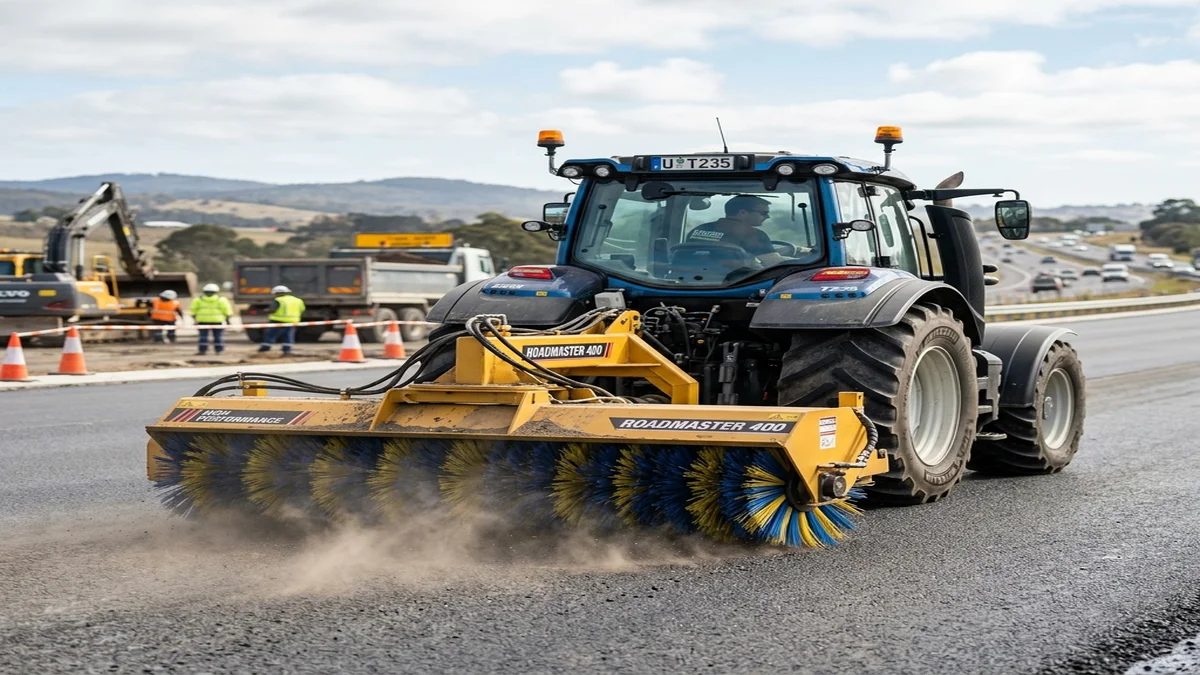
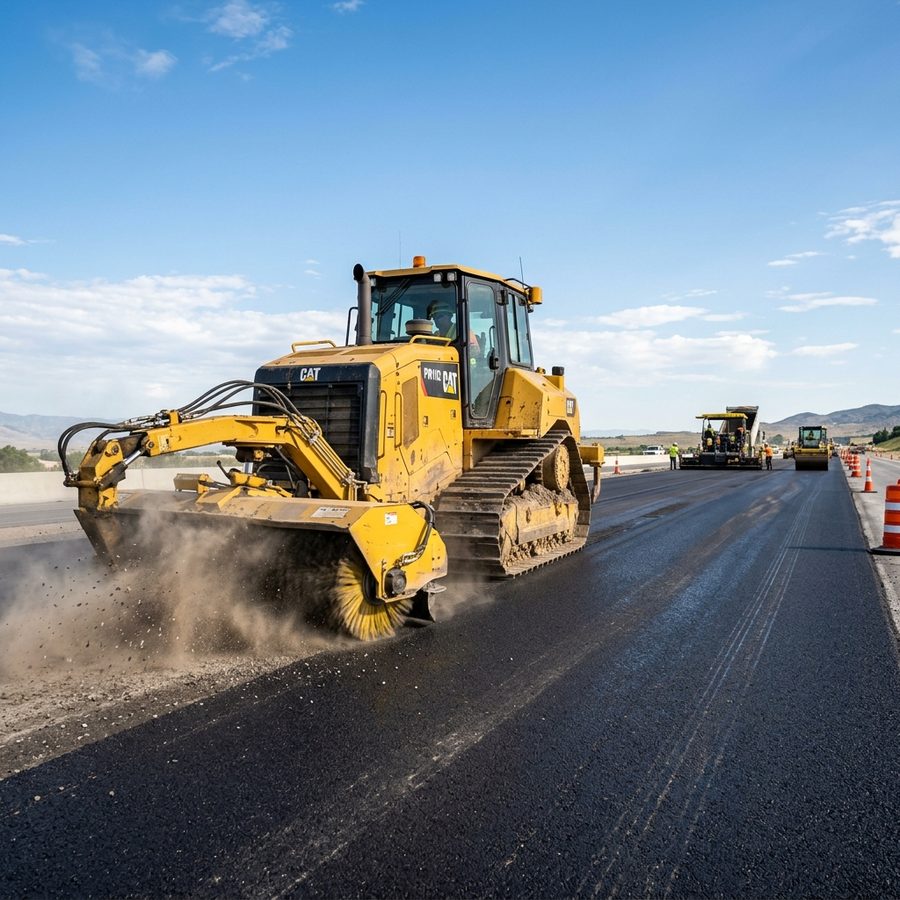
Broomer brushes are consumable assets in road construction. Excessive downforce, incorrect sweeping angle, or neglected core alignment can cause premature bristle flattening, reduce cleaning efficiency, and double replacement frequency. Following systematic maintenance procedures significantly extends brush operational life.
1. Master the “Sweeping Flick Pattern” (Ground Contact Pressure)
The most common cause of rapid bristle failure is applying too much downforce. When the broom is pressed too hard against the pavement, bristles bend excessively and wipe rather than flick debris.
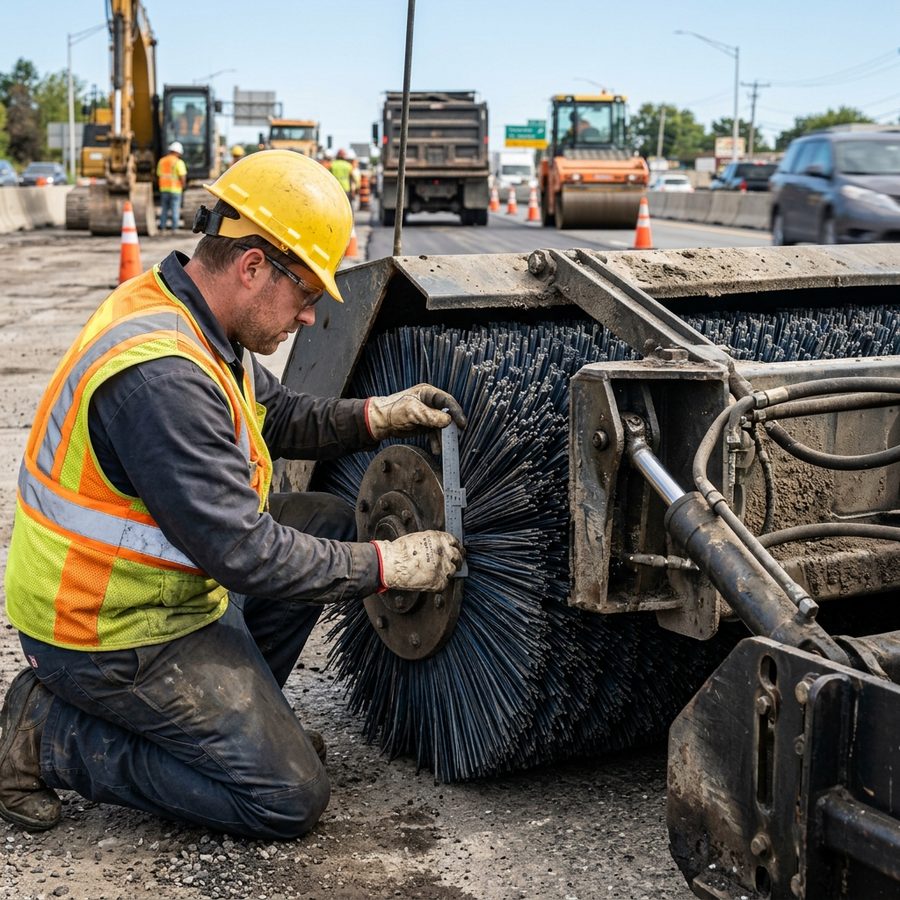
- Optimal Contact Pattern: Lower the broom until the bristles touch the ground with a 2-inch to 4-inch (50mm – 100mm) wide contact strip.
- Testing the Pattern: Park the sweeper on a flat concrete surface, run the broom at operating speed for 10 seconds without moving, and check the polished footprint width.
2. Adjust Sweeping Angle & Left/Right Side Wear
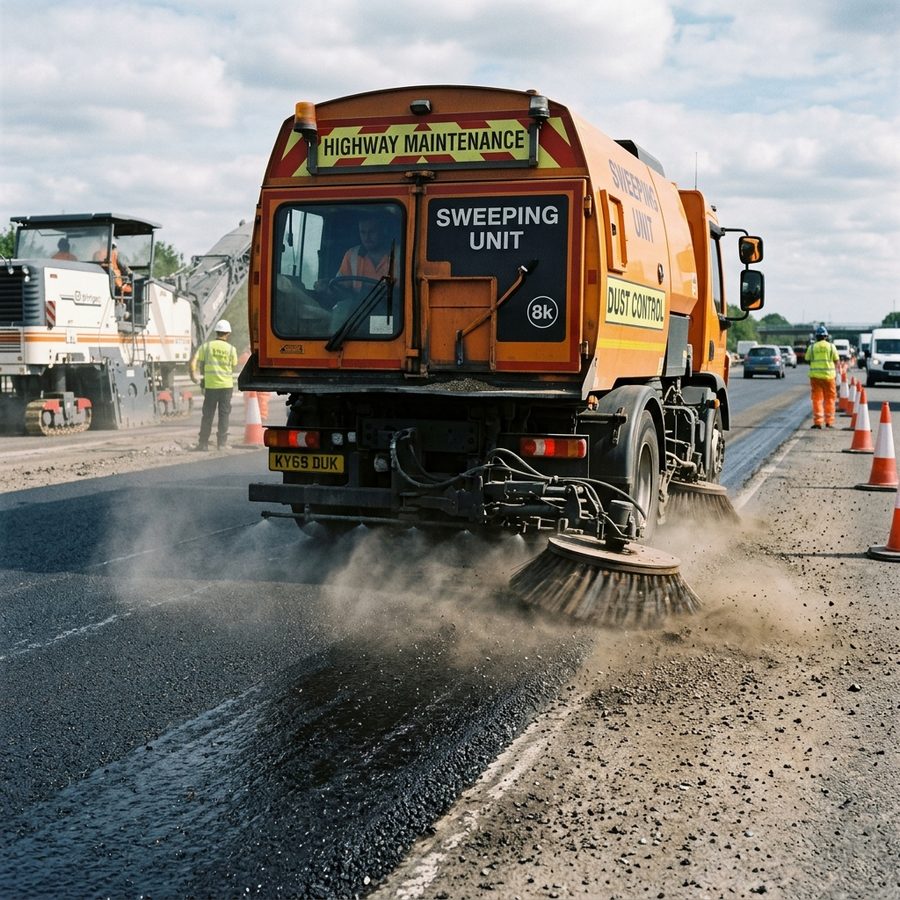
When sweeping angled to windrow dirt to the roadside, the leading edge of the broom experiences higher resistance than the trailing edge. Rotating the brush core end-for-end every 40-50 operating hours ensures even bristle wearing across the entire shaft length.
3. Preventive Maintenance Checklist
- Daily Inspection: Clear wrapped steel wires, plastic strapping, or twine from the brush core shaft before starting operations.
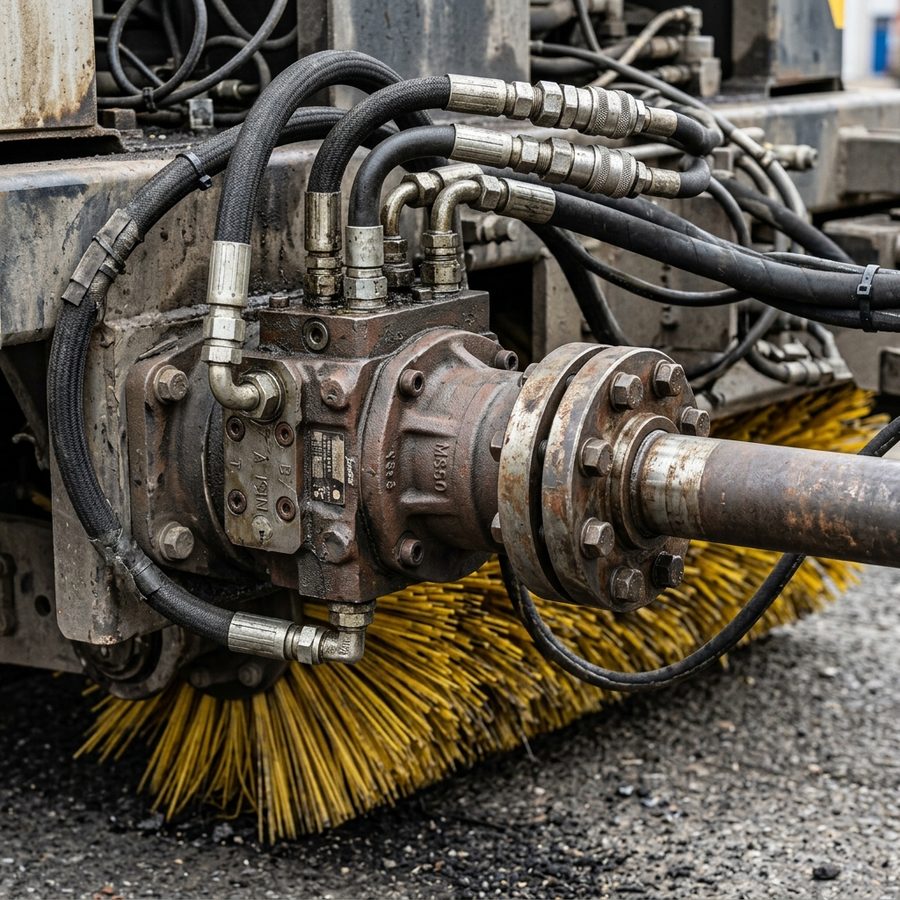
- Hydraulic Pressure Check: Verify system pressure remains within manufacturer limits (140 – 180 bar). Excessive hydraulic pressure causes overheating and core vibration.
- Storage Best Practices: Never store the broomer parked with the weight resting directly on the bristles. Always raise the hydraulic lift arms or rest the sweeper frame on support legs to prevent permanent bristle deformation.
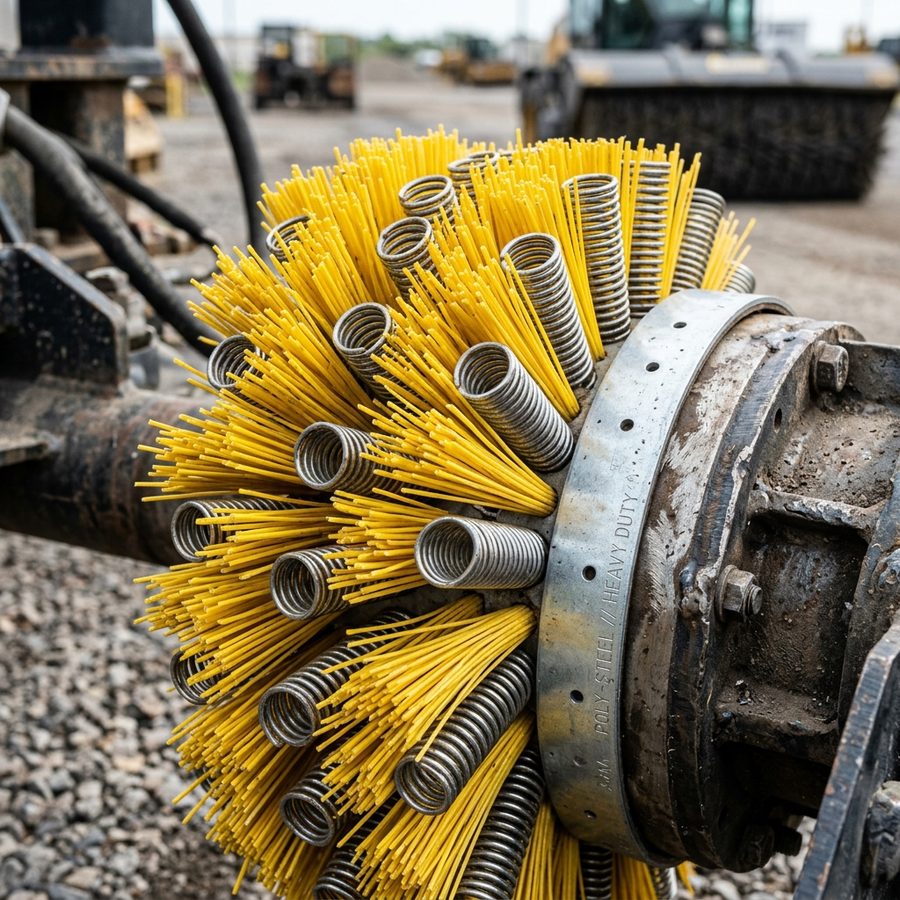
Investing in heavy-duty Vision Infra replacement broomer brushes ensures balanced core construction, high spring-steel tension, and uniform wear distribution for maximum paving uptime.