The Science of Road Cleaning Prior to Bitumen Emulsion Spraying
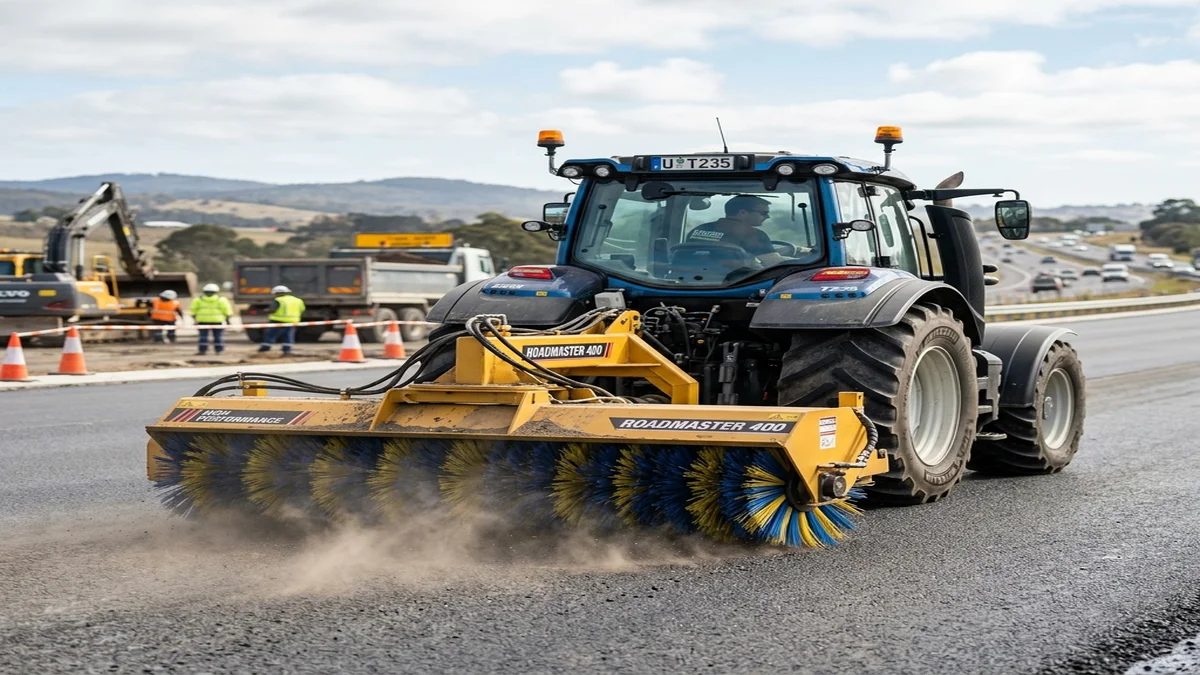
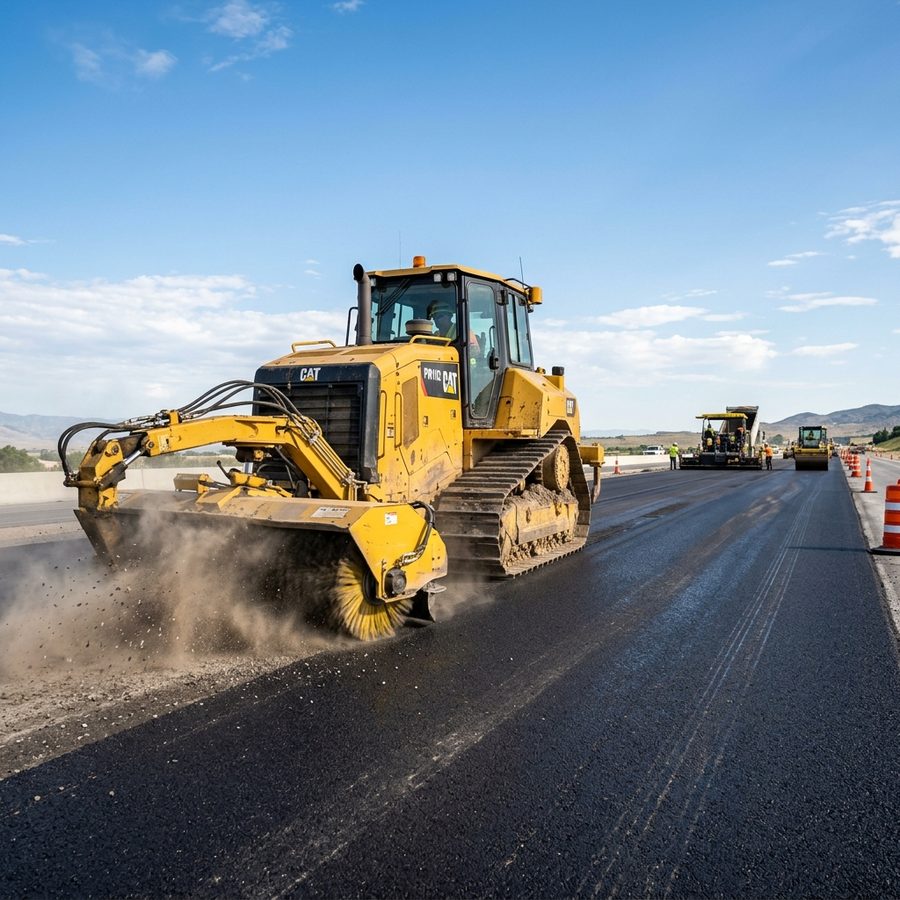
In asphalt paving, bond failure between the granular base, milled road bed, and newly laid asphalt overlay leads to rutting, pothole formation, and premature pavement distress. Achieving an unbreakable inter-layer bond requires thorough surface preparation using high-torque hydraulic broomers.
1. Removing Fine Dust vs. Standard Sweeping
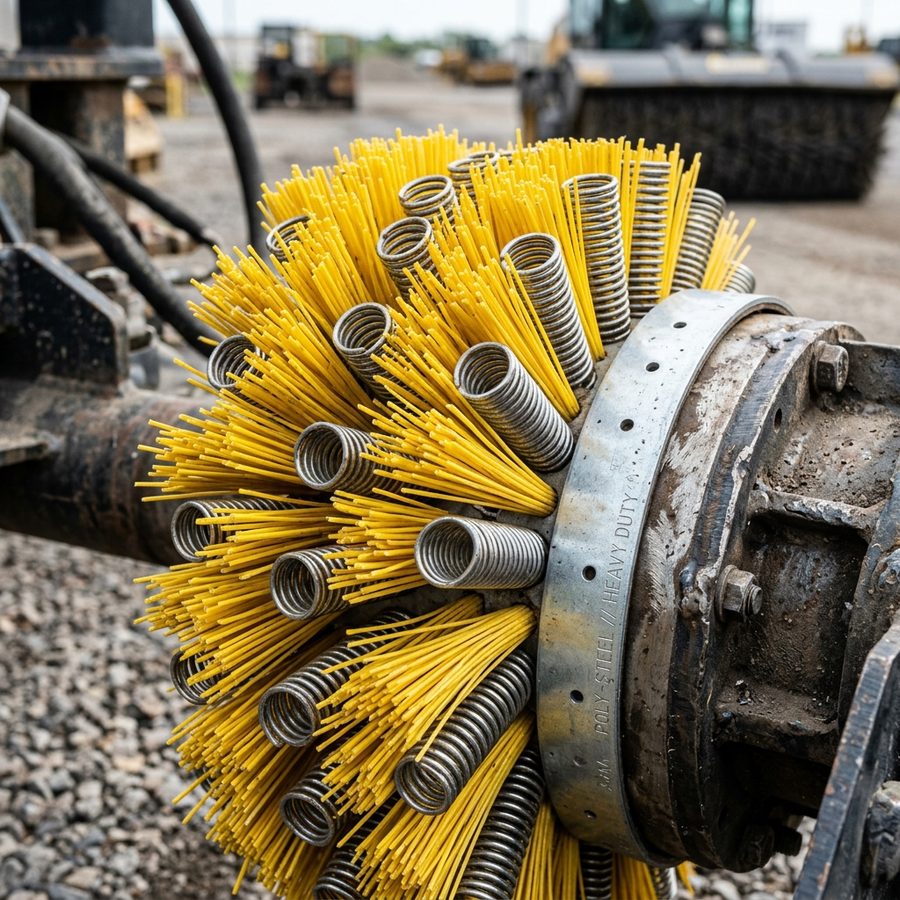
Fine dust particles act as a boundary layer, preventing bitumen emulsion (RS-1 / MS-1 grade) from adhering directly to aggregate surfaces. While manual sweeping leaves fine silt behind, a high-speed hydraulic broomer equipped with poly/wire combination brushes dislodges micro-dust from aggregate crevices.
2. The Role of High Hydraulic Motor Torque
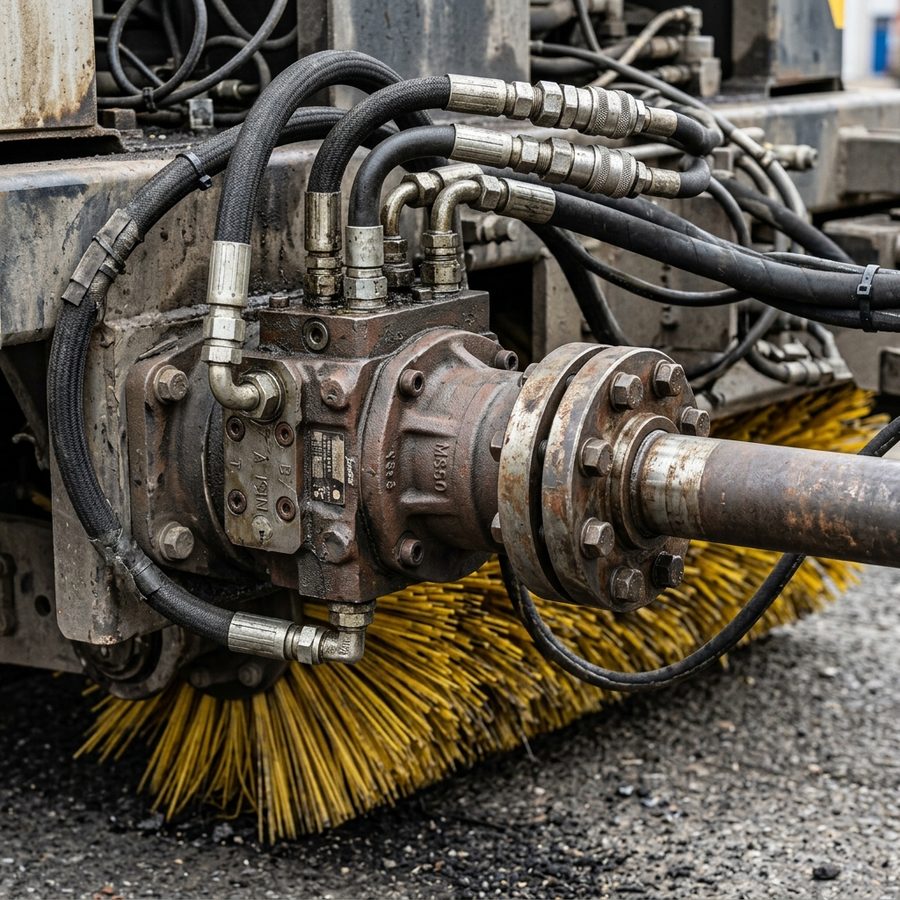
Sweeping compacted base courses or milled asphalt beds requires high hydraulic motor torque to maintain constant core RPM under heavy debris loads. Low-torque sweepers stall or slow down when encountering thick mud or loose gravel pockets, leaving uncleaned patches along the paving track.
3. Integrated Dust Control Water Systems
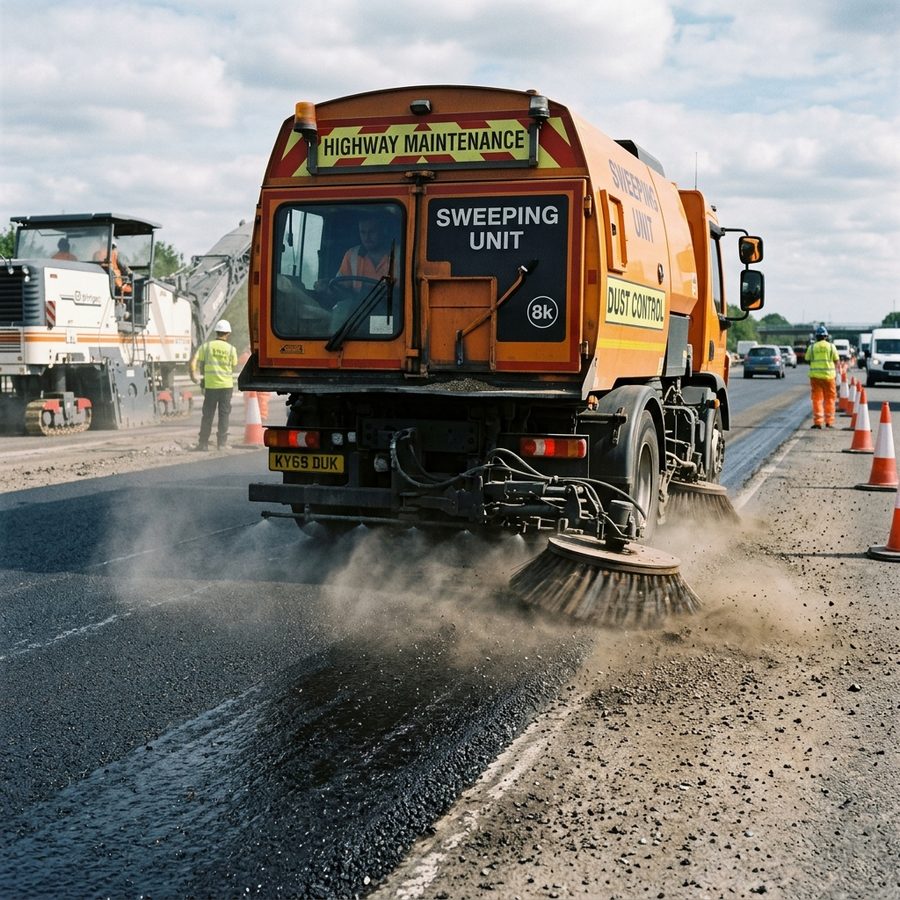
Modern hydraulic sweepers feature low-pressure water spraying nozzles positioned ahead of the broom core. Water mist suppresses airborne dust clouds, improving operator visibility and compliance with ambient air quality guidelines on major highway projects.
Best Practices for Pre-Paving Surface Prep
- Operate the hydraulic broomer 15-30 minutes ahead of the bitumen sprayer truck to ensure the cleaned surface remains dry.
- Execute a dual-pass sweeping pattern: a high-angle pass to throw heavy aggregate to the shoulder, followed by a straight pass for fine silt cleanup.
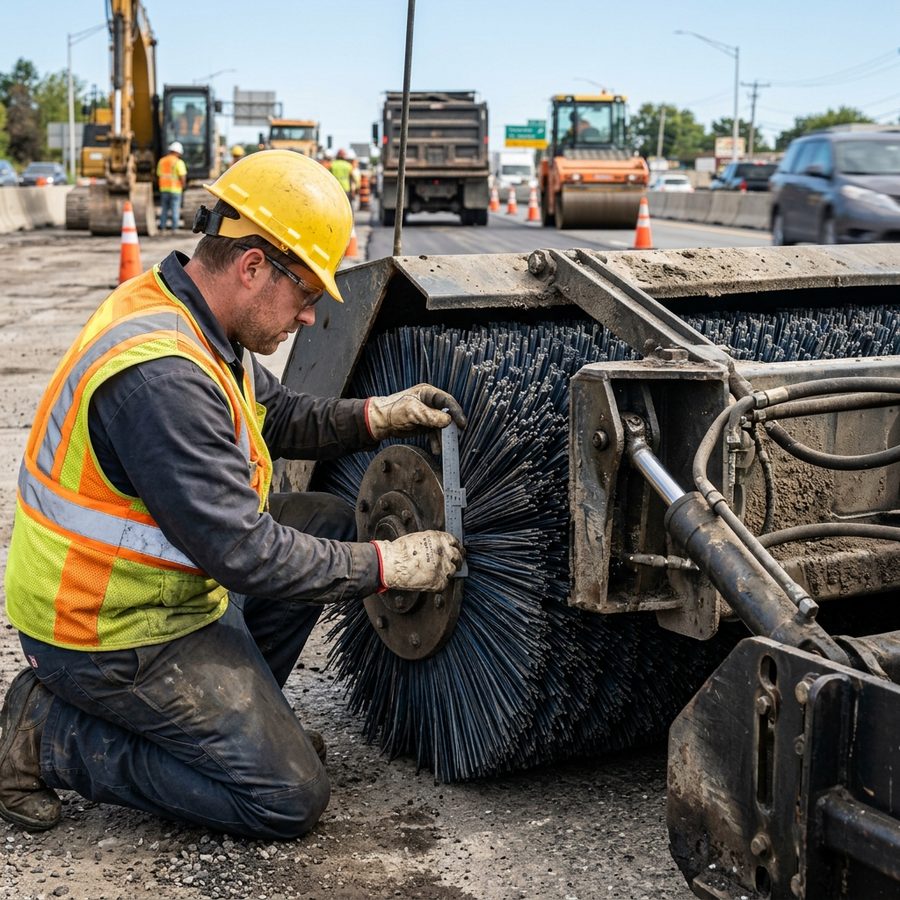
- Verify that replacement broomer brushes feature rigid inner steel rings to prevent slippage on high-torque drive shafts.