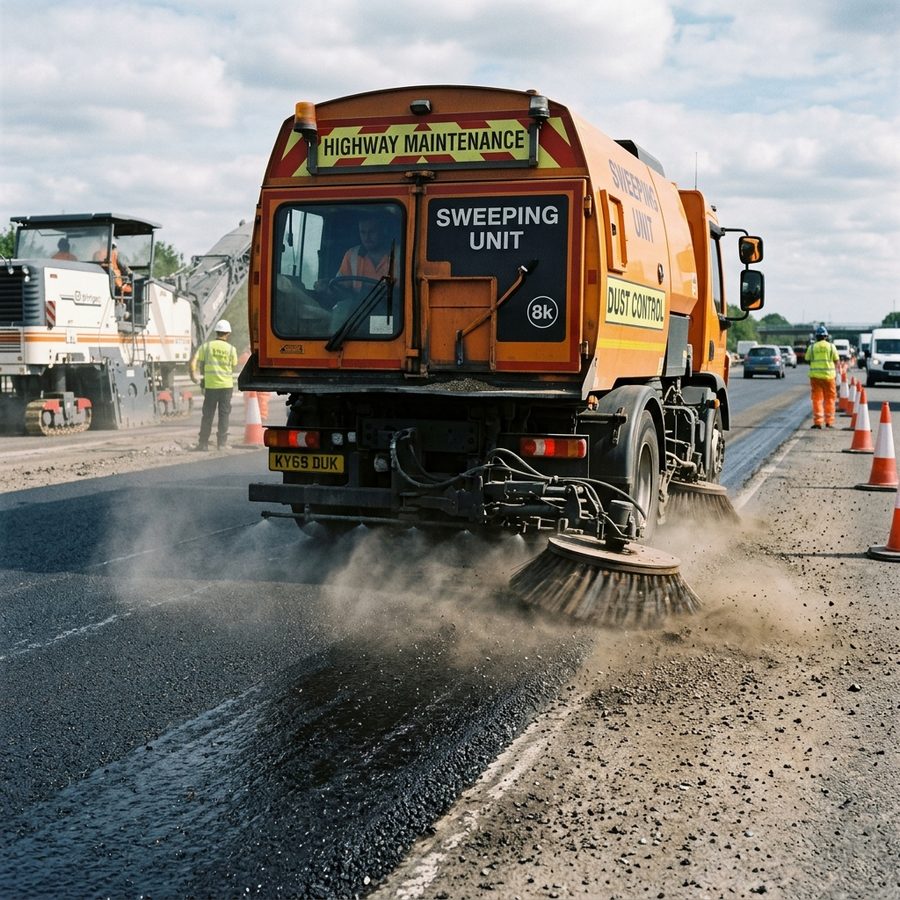
In modern highway construction and pavement maintenance, surface preparation is the single most critical factor determining the longevity of bituminous layers. Before applying a prime coat or tack coat, the road surface must be completely free of fine dust, loose aggregate, mud, and milled debris. Failing to achieve a clean substrate leads to poor asphalt bonding, delamination, and premature pothole formation.
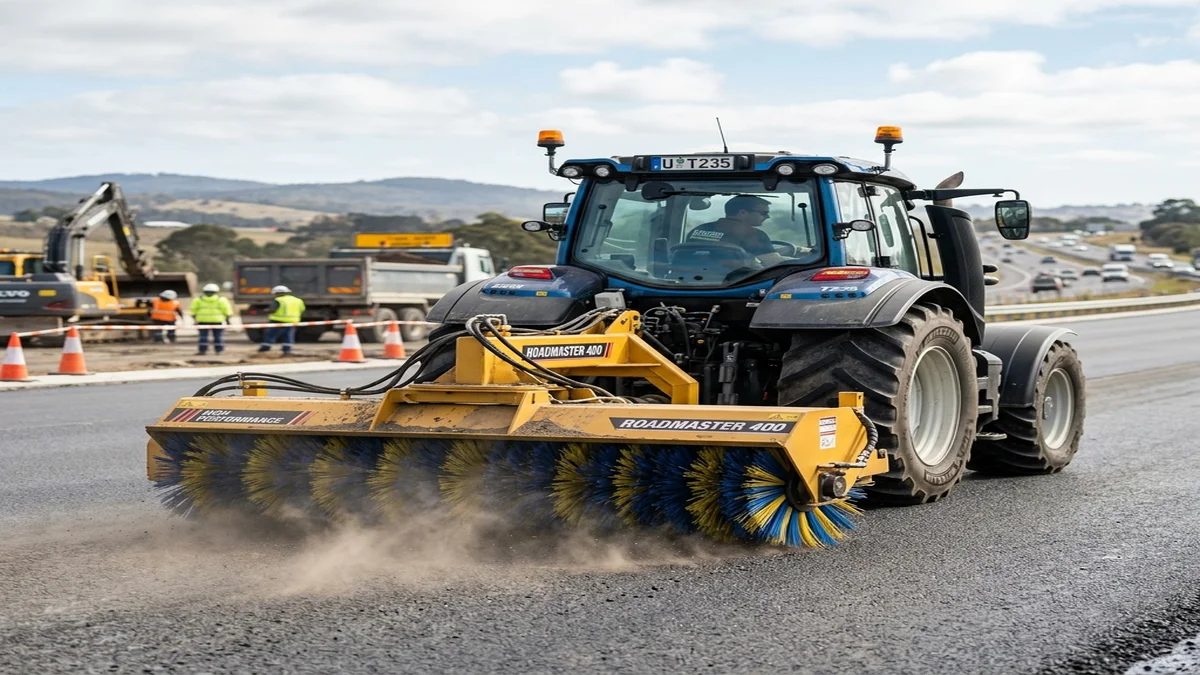
Contractors rely heavily on tractor-mounted and loader-attached road broomers to prepare surfaces efficiently. However, when selecting a sweeping attachment or upgrading fleet equipment, a fundamental technical decision arises: Should you invest in a Hydraulic Road Broomer or a Non-Hydraulic Mechanical Broomer?
In this technical comparison guide, Vision Infra Equipment breaks down the mechanical architecture, performance metrics, maintenance requirements, and Total Cost of Ownership (TCO) of both systems to help you choose the right broomer attachment for your projects.
1. Understanding the Core Mechanics
Hydraulic Road Broomers (Direct Hydraulic Drive)
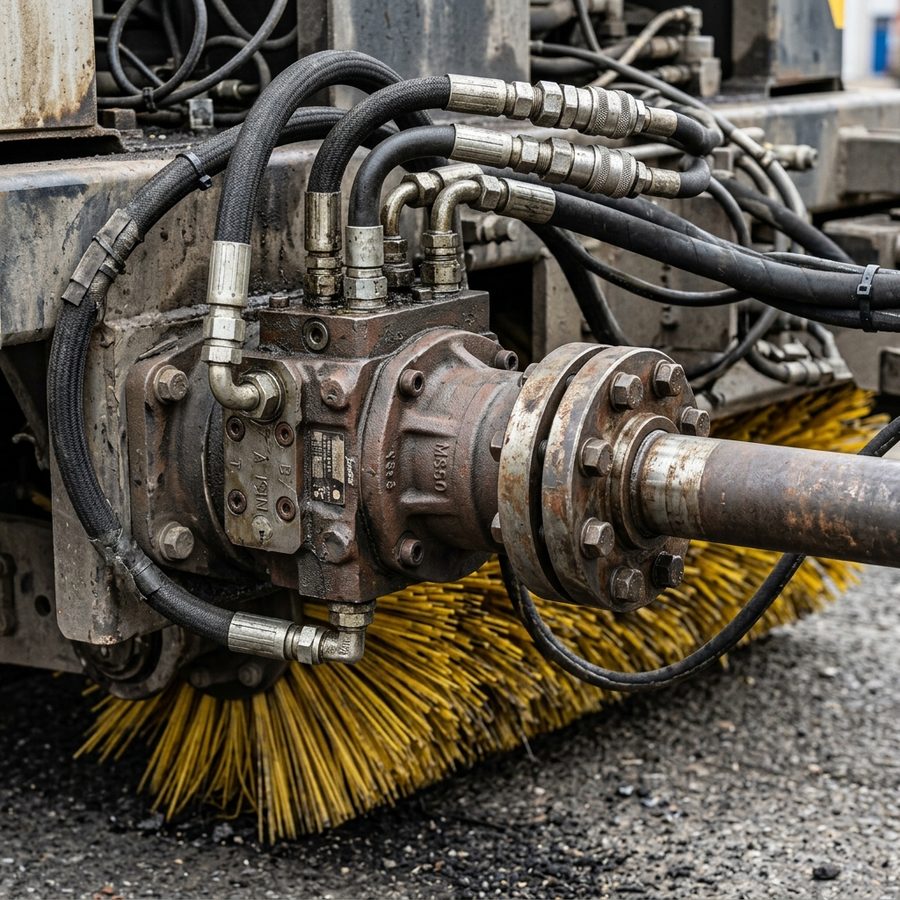
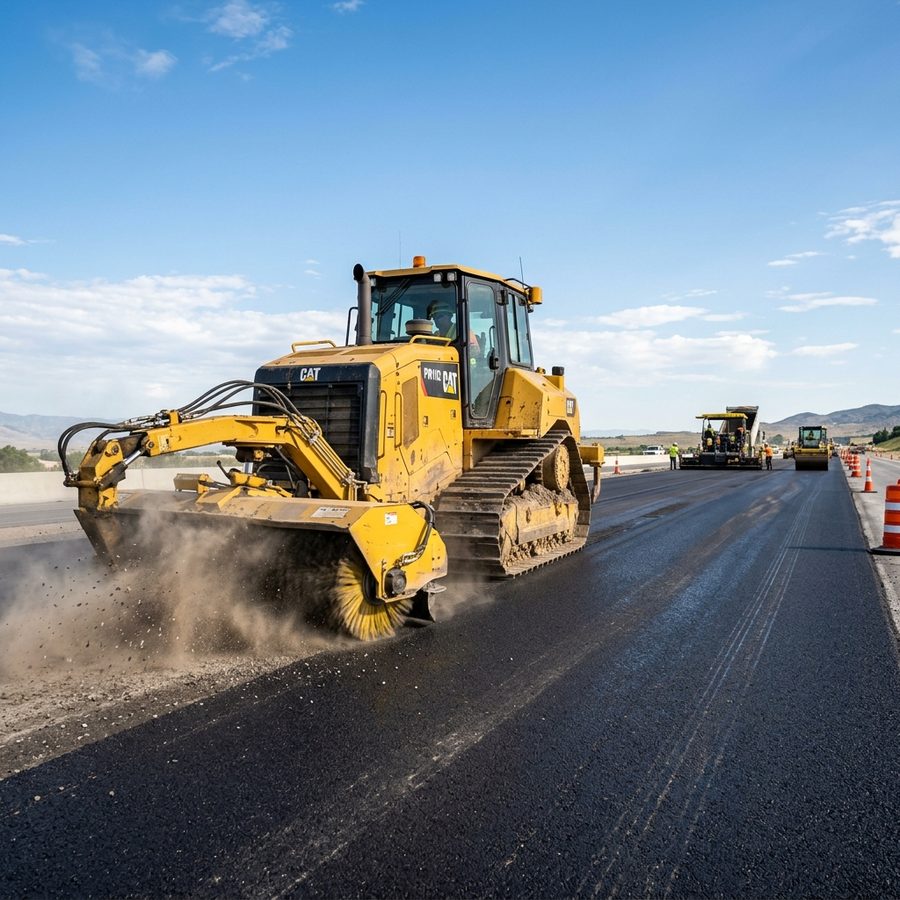
Hydraulic road broomers utilize a dedicated high-torque hydraulic motor powered by the tractor or loader auxiliary hydraulic system (PTO pump or hydraulic auxiliary lines). The motor directly rotates the central broomer shaft without needing external belts, drive shafts, or chain linkages.
- Constant RPM Control: The broom rotation speed (RPM) can be adjusted and maintained independently of the vehicle ground speed.
- Variable Downforce & Sweeping Angle: Hydraulic cylinders allow quick hydraulic angling (left/right up to 30 degrees) and continuous height adjustment directly from the driver cabin.
- Integrated Dust Suppression: Hydraulic broomers easily incorporate high-pressure water spray pumps driven by the same auxiliary hydraulic loop to control airborne dust in urban construction zones.
Mechanical / Non-Hydraulic Broomers (Friction or Chain Drive)
Mechanical broomers rely either on a ground-wheel friction mechanism (where forward movement turns the broom shaft) or a mechanical PTO drive shaft coupled with chains and belt pulleys.
- Ground Speed Dependent: Broom rotation speed is tied directly to tractor speed. Slower vehicle movement results in reduced sweeping torque and lower broom RPM.
- Manual Angling & Height Adjustment: Most mechanical broomers require manual mechanical pin adjustment to change sweeping angle or bristle contact height.
- Mechanical Wear Points: Drive belts, chains, sprockets, and shear pins are subjected to high friction, dust contamination, and frequent snapping under heavy mud loads.
2. In-Depth Technical & Operational Comparison
| Feature / Metric | Hydraulic Road Broomer | Mechanical / Non-Hydraulic Broomer |
|---|---|---|
| Drive System | Direct High-Torque Hydraulic Motor | Chain, Belt, or Wheel-Friction Drive |
| RPM Stability | Constant, Independent of Vehicle Speed | Varies with Vehicle Speed & Wheel Friction |
| Heavy Debris & Mud Handling | Superior — Constant Torque Prevents Stalling | Moderate — Prone to Belt Slippage / Stalling |
| Angling & Position Control | Hydraulic Cabin Control (Left / Right / Raise) | Manual Mechanical Pin Adjustment |
| Maintenance Requirements | Low — Sealed Oil Bath & Hydraulic Circuit | High — Frequent Chain Tightening & Belt Replacement |
| Brush Bristle Wear Uniformity | Even Wear via Hydraulic Pressure Regulation | Uneven Wear due to Bounce & Fixed Ground Contact |
| Dust Suppression System | Integrated Hydraulic Water Pump & Nozzles | Optional Gravity Feed / Manual Water Tank |
3. Bristle Wear & Replacement Brush Performance
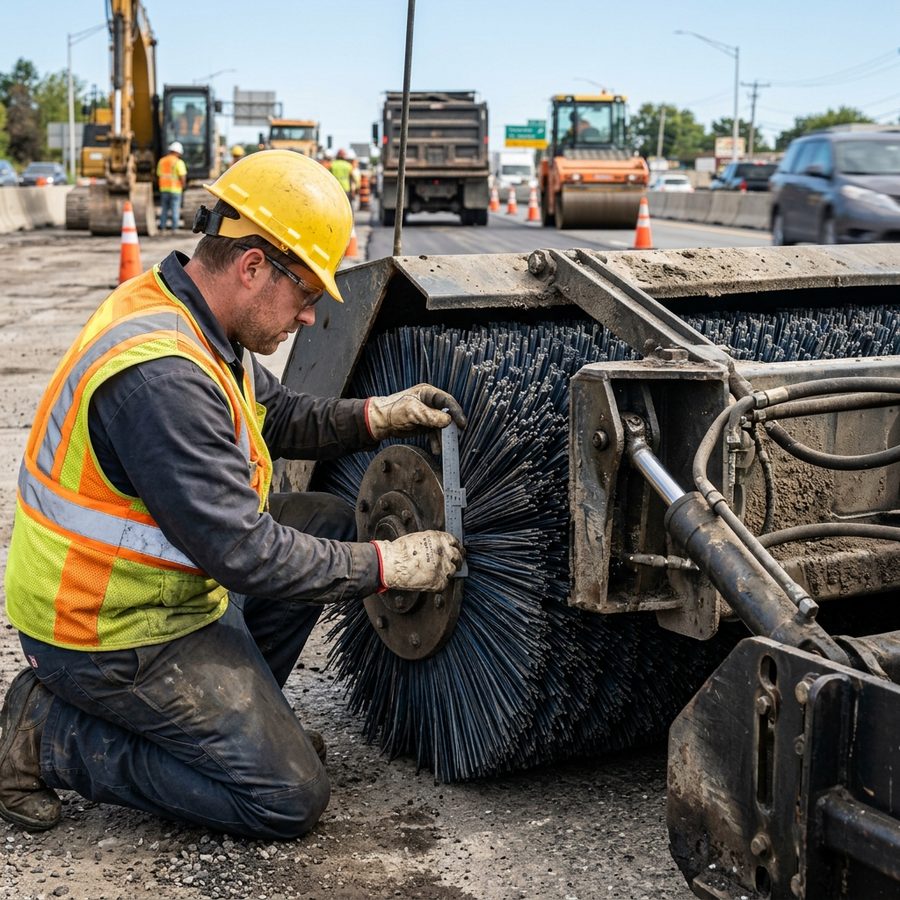
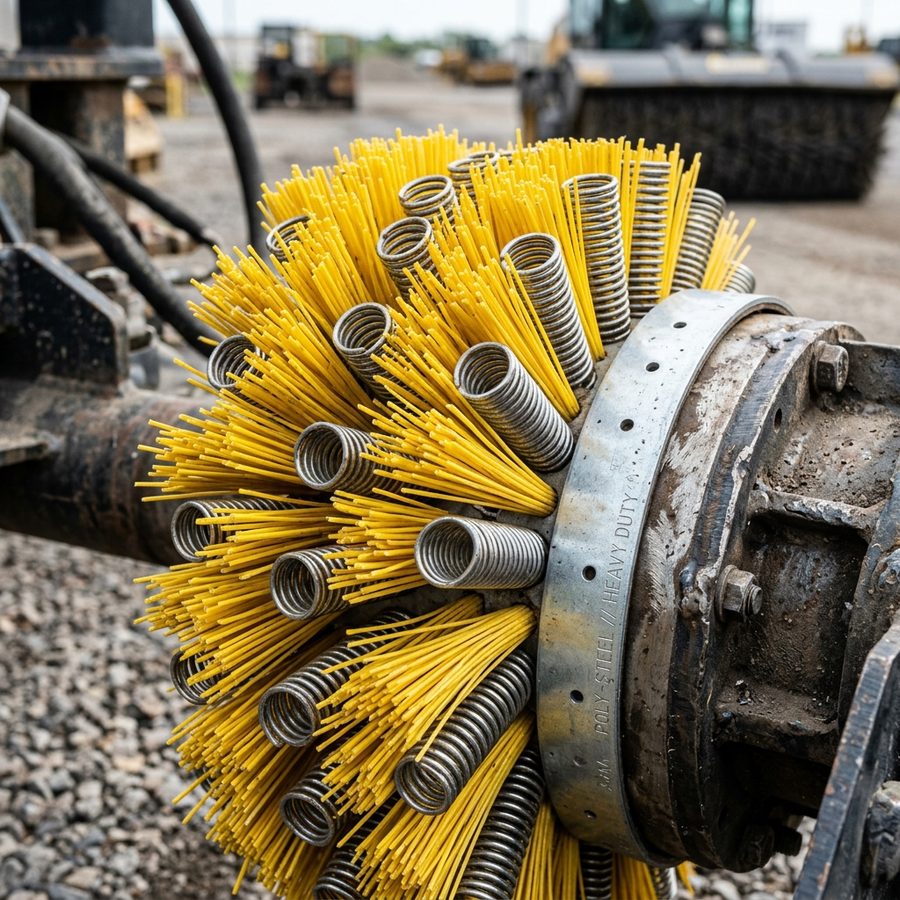
Whether operating a hydraulic or mechanical unit, the quality and design of the Broomer Brush Set directly influence sweeping efficacy and operational costs. Modern road sweepers use three main bristle configurations:
- Polypropylene (PP) Brushes: Flexible, highly resistant to moisture and chemical degradation, ideal for fine dust and general road sweeping.
- High-Tensile Steel Wire Brushes: Rigid steel wire tufts designed for dislodging compacted mud, embedded gravel, and heavy asphalt milling debris.
- Combination PP + Steel Wire Brush Sets: Alternating tufts of Polypropylene and Steel Wire that combine deep scrubbing action with comprehensive fine dust removal.
The Hydraulic Advantage in Bristle Life: Because hydraulic broomers allow operators to fine-tune downforce pressure electronically or hydraulically, bristles maintain optimal ground contact without excessive dragging. Mechanical broomers, lacking active pressure compensation, frequently press bristles too hard against uneven road surfaces, causing premature bristle fracture and accelerated wear.
4. Total Cost of Ownership (TCO) & ROI Analysis
While mechanical broomers carry a lower initial purchase price, a long-term TCO evaluation strongly favors hydraulic broomers for commercial road contractors:
- Downtime Reduction: Mechanical broomers experience frequent downtime caused by snapped drive chains, worn pulleys, and damaged universal joints. A hydraulic broomer operates in a closed, lubricated hydraulic system with virtually zero exposed drive parts.
- Fuel & Operator Efficiency: Hydraulic broomers allow sweeping at higher forward ground speeds while maintaining maximum broom RPM. A highway section that takes 4 hours to sweep with a mechanical broomer can often be completed in under 2 hours with a hydraulic unit.
- Quality of Surface Prep: Superior dust clearance ensures 100% tack coat adhesion, eliminating costly road rework or audit failures during government highway quality checks.
5. Verdict: Which Road Broomer Should You Buy?
Choose a Mechanical Broomer if:
- You are managing small rural paving contracts or periodic facility cleanup with minimal daily usage.
- Your existing tractor lacks auxiliary hydraulic oil flow capacity (GPM/LPM).
- Capital expenditure budget is strictly limited for short-term projects.
Choose a Hydraulic Road Broomer if:
- You execute National Highway (NH), State Highway (SH), or expressways paving contracts requiring stringent dust clearance standards.
- You require heavy-duty performance for sweeping cold-planed (milled) asphalt surfaces.
- You want minimal equipment maintenance, hydraulic cabin controls, and integrated water dust suppression.
Partner with Vision Infra Equipment for Premium Road Sweeping Solutions
Vision Infra Equipment offers heavy-duty Tractor-Mounted Hydraulic Road Broomers, Hydraulic Broomers with Collector Buckets, and OEM-grade Broomer Replacement Brush Sets (Polypropylene, Steel Wire, and Combination sets). Engineered for maximum durability in harsh Indian construction environments, our equipment ensures effortless surface preparation and long operational life.
Explore our complete product lineup or contact our technical team today for customized broomer brush solutions and immediate site deployment!